When a set of cartridge filters dies months early, the natural response is to blame the filters and order another set. That is usually the wrong call. Early failure in a dust collector nearly always traces back to one of three causes: a pulse cleaning system that is not doing its job, filter media that does not suit the dust, or a cartridge that was never right for the housing.
Fit new cartridges without fixing the cause, and the new set fails just as fast. This post works through each cause, shows the signs to look for, and lists what to send us before you order. For how pulse-jet collectors work, see our baghouse filter guide.
What Counts as Early
Replace dust collector cartridges on the pressure gauge, not the calendar. The gauge shows the pressure difference across the filters (differential pressure, in pascals, Pa). Replace the set when it reaches 900 Pa and pulse cleaning can no longer bring it back below 700 Pa. Normal running sits between 200 and 600 Pa.
If your last set hit 900 Pa in a fraction of the time the set before it lasted, something changed. The filters are the symptom. Short life also costs more than the cartridges: there is the downtime of each change, and the compressed air the cleaning system burns pulsing at filters it can no longer clean.
Cause 1: The Pulse Cleaning System
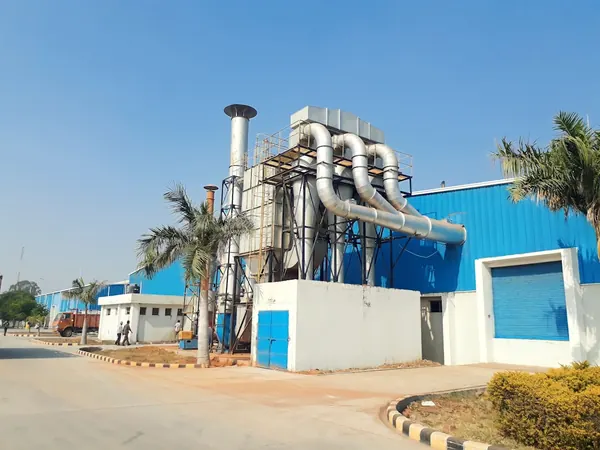
In a pulse-jet collector, a short blast of compressed air is fired down the inside of each cartridge every few minutes. The pulse flexes the pleats and knocks the dust off into the hopper. When that cleaning goes wrong, the cartridges pay for it. Three faults are common.
Wrong pulse pressure. Too low and the pulse cannot knock the dust off: the layer of dust packs hard and the media clogs. Too high and every pulse flexes the pleats hard enough to wear them out early. The EPA fact sheet on cartridge collectors gives a design range of 415 to 830 kPa, and most systems run at 5 to 7 bar. Check the plate on your collector against the gauge on the air header. Pulsing more often than the dust needs also wears the media and wastes air (Processing Magazine).
Wet or oily compressed air. This is the most common hidden cause. Water or compressor oil in the pulse air coats the media from the inside. Dust sticks to the film instead of falling off, and pulsing cannot clear it. The same wet air also damages the rubber diaphragms in the pulse valves. If your air receiver drains water, or there is no dryer, water trap or oil filter ahead of the collector, start here.
Worn pulse valves. The diaphragm inside each pulse valve wears out. A stiff or torn diaphragm gives a weak pulse, or none, on the row that valve serves. That row stops cleaning, clogs first and drags the whole housing’s pressure up. A row of cartridges much dirtier than its neighbours at change-out points straight at its valve.
Cause 2: The Wrong Media for the Dust
The media is the pleated material inside the cartridge. It decides which dust the filter suits.
What kills cellulose: moisture. Cellulose is a plant fibre. It soaks up moisture and swells. In a humid plant, a wash-down area or a damp process, the dust turns crusty and plugs the pleats. Dust that absorbs moisture from the air by itself, such as cement, fertiliser or sugar, cakes onto cellulose for good. These are polyester duties, made to order. If dead cartridges come out with a hard, crusted layer that pulsing never shifted, and the media is cellulose, you have found your cause.
Fine powder and fume. Welding, laser and plasma fume is too fine and sticky for a general F6 cellulose cartridge. So is powder that has to come off the filter cleanly, as in a powder coating booth that recovers powder. Spunbond polyester, with a PTFE membrane option (a thin film that keeps fine dust on the surface), releases this dust far better. The trade-off is a higher purchase price.
Combustible dust. Wood, flour and some metal dusts can burn or explode. These need antistatic media, and your site safety assessment decides the specification, not us.
If the dust, the moisture or the process has changed since the collector was specified, choose the replacement media for today’s conditions, not the original order.
Cause 3: The Wrong Cartridge for the Housing
Too little filter area. Fit cartridges with too little media for the airflow, or push more air through the housing than it was built for, and dust is driven deep into the pleats. The cleaning system works harder and every cartridge ages fast. If short life began after a fan upgrade or extra extraction points were added, suspect this.
Seal failure. The gasket between the cartridge and the tube sheet (the plate the cartridges hang from) is the only barrier between the dirty and clean sides (EPA fact sheet). A damaged, hard or badly seated gasket lets dusty air go around the media. The tell is dust on the clean side or at the outlet, while the gauge reads low, because the gauge only measures air going through the media.
Wrong fit. End caps, open or closed bottom, top flange, gasket and any bayonet, lid or threaded fitting all have to match the housing. A near-miss cartridge can often be forced in and will even run, but the seal leaks and the pulse does not clean as designed. Matching length and diameter is not enough.
Signs the Cartridge Is Wrong for the Job
Before you blame the filter, look for these:
- Pressure climbs fast and pulsing does not bring it back down. Check the compressed air, the header pressure and the pulse valves first, then the media.
- Dust caked between the pleats, or a damp, crusty surface. Moisture, oil in the pulse air, or cellulose on a dust it cannot handle.
- Pleats bent, collapsed or torn. Check the pulse pressure, and whether the cartridge suits the duty.
- Dust on the clean side or at the outlet. A split, a bad seal or the wrong fit.
- A sudden drop in pressure from the normal range. Torn media or a cartridge that has come loose. Pull and inspect the suspect row.
- A much shorter life than the last brand you used. Usually the media is wrong for the dust, or there is moisture or oil in the pulse air.
Log the gauge reading once a week. It takes a minute and gives you a dated record to compare one set against the next.
What to Send Us Before You Order
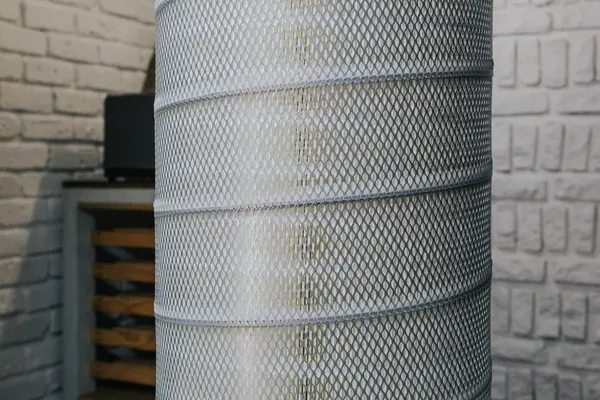
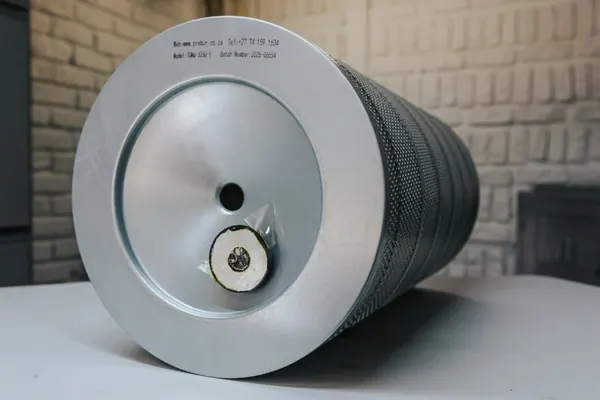
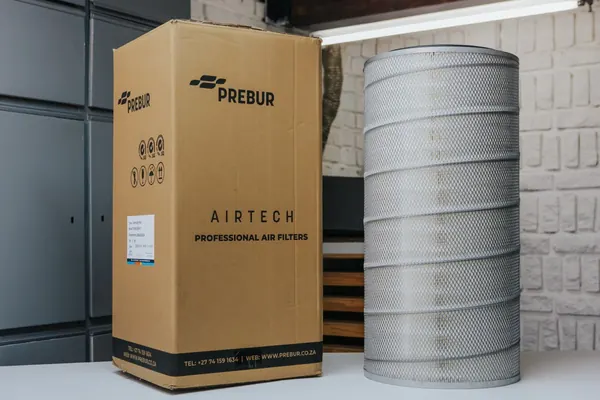
Once the cause is fixed, the replacement is straightforward. Prebur stocks two Airtech cartridges at our Silverton warehouse: L600 × OD324 mm and L660 × OD324 mm, cellulose media manufactured to EN779 F6, with a galvanised top cap and inner and outer mesh. Each starts at a maximum of 160 Pa when new and is replaced at 900 Pa. They suit compressor and blower intakes and dry, light dust in pulse-jet collectors. Full details are on the cartridge filters page.
To match a cartridge, send Nick:
- The part number off the old cartridge, or a photo of the label and both ends.
- The size: outer diameter, inner diameter and length in mm.
- The end caps: open or closed bottom, top flange, gasket, and any bayonet, lid or threaded fitting.
- The make and model of the collector, booth or intake housing.
- The dust or duty: intake air, grinding, blasting, powder, fume, wood or cement.
- The conditions: damp or oily, hot, or combustible dust with a site safety assessment.
- For powder coaters: do you recover powder or spray to waste, and how often do you change colour?
- How many cartridges per change, and how often you change them.
If it is one of our stocked sizes and a good fit for the duty, we sell from stock. Anything else goes to a quote: other sizes and end caps, polyester, PTFE membrane, antistatic or repellent-treated media, and stainless steel caps and mesh, all made to order on a 7 to 10 day lead time. Online orders are delivered nationwide by courier, with delivery quoted live for your address at checkout, or you can collect. We have supplied industrial plants since 1989.
Short cartridge life on your collector? Call Nick Els on +27 74 159 1634 or get a quote.
Frequently Asked Questions
How long should dust collector cartridge filters last?
There is no honest single number. Life depends on how much dust the collector handles and how fine it is, whether the media suits the dust, how well the pulse cleaning works, and whether the housing is moving more air than it was built for. Go by the pressure gauge instead of the calendar: replace at 900 Pa when pulse cleaning can no longer bring the reading back below 700 Pa. Note how long each set lasts, so you have your own site baseline.
Can cartridge filters be washed and reused?
Not cellulose: it soaks up water, swells and is ruined. Polyester can be washed and blown down, but replacement is normally the safer call. Washing also does not fix a fault in the cleaning system, and media clogged by oily pulse air does not come clean.
What pulse pressure should my dust collector run at?
The pressure on the manufacturer's plate. As a sanity check, the EPA design range for cartridge collectors is 415 to 830 kPa, and most systems run at 5 to 7 bar. Too low and the dust is not knocked off; too high and the pleats wear out. Read the gauge on the air header itself, because what the compressor puts out is not always what reaches the valves.
Should I choose polyester or cellulose media?
Cellulose suits dry, room-temperature dust that is not sticky and not combustible. As a general media fact, cellulose tops out at roughly 70 degrees C. Choose spunbond polyester when the dust is damp, oily or absorbs moisture (cement, fertiliser, sugar), for fine powder, or for fume. Combustible dust needs antistatic media, and your site safety assessment decides that. Polyester, PTFE membrane, antistatic and repellent-treated media are made to order.
Can a cartridge be re-sleeved instead of replaced?
No. Re-sleeving is a repair for fabric bags in older baghouse designs. A pleated cartridge is a bonded assembly of media, mesh and end caps, and is replaced as a complete element. If you run an older bag-type collector, call Nick and describe the housing.
Do you stock dust collector cartridge filters in South Africa?
Yes. The two standard Airtech sizes (L600 and L660, both OD324 mm) are in stock at our Silverton warehouse in Pretoria. Other sizes, end caps and media are made to order on a 7 to 10 day lead time. Online orders are delivered nationwide by courier, with delivery quoted live for your address at checkout, or you can collect from Silverton.
Need help choosing the right filter?
Speak to Nick Els for expert advice on filter selection, cross-referencing, and pricing for your facility.