Many powder coating booths pull air through pleated cartridge filters. Powder that misses the part lands on the cartridges. A short pulse of compressed air knocks it off into a hopper or tray below, and the booth keeps running. The question we hear is which filter media to use: cellulose or polyester. The answer depends on what you do with the overspray.
Powder Coating Filters: The Two Media
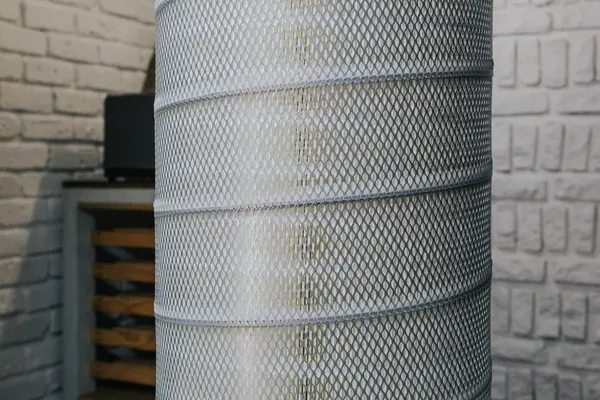
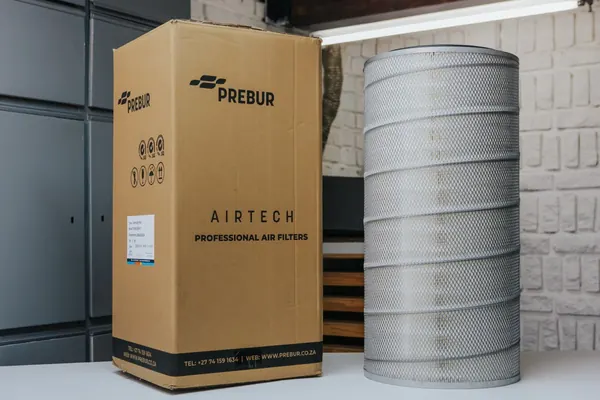
Cellulose is a plant fibre. It is soft, so a cellulose cartridge has a steel mesh around the outside to hold the pleats in shape under the pulse. It holds a lot of dust in its depth. Our stocked Airtech cartridge is cellulose, manufactured to EN779 F6.
Spunbond polyester is a synthetic media. It is stiff enough to run without an outer mesh. It is strong, and powder blows off it cleanly. It holds much less powder in its depth than cellulose, and for powder coating that is the point. A PTFE membrane option (a thin film on the polyester that keeps fine powder on the surface) releases powder even better. Polyester and PTFE cartridges are made to order, and they cost more than cellulose.
For more on why one has a mesh and the other does not, see why a dust collector cartridge has a steel mesh.
Spray-to-Waste Booths: Cellulose Works
A spray-to-waste booth throws overspray away rather than recovering it. If yours is a small, basic booth that works this way, the stocked cellulose cartridge works. The overspray is waste either way, so the powder the cellulose holds is not lost.
This suits the stocked cartridge’s general duty: dry dust that is not sticky, at room temperature.
Powder Recovery or Frequent Colour Changes: Polyester
If you recover overspray to use again, you want as much powder as possible to come off the filter. Cellulose holds too much of it. Meshless polyester lets the powder blow off cleanly, so more comes back for reuse. Ask about the PTFE membrane option for very fine powder.
The same goes for frequent colour changes. Polyester leaves far less of the old powder in the filter between colours.
Combustible Powder: The Safety Assessment Decides
Some powders can burn. Where that risk exists, the booth may need antistatic polyester media, which bleeds off static charge. Your site safety assessment drives that choice, not the filter supplier. If you have an assessment, send it with your enquiry and we will quote to it.
Will It Fit My Booth?
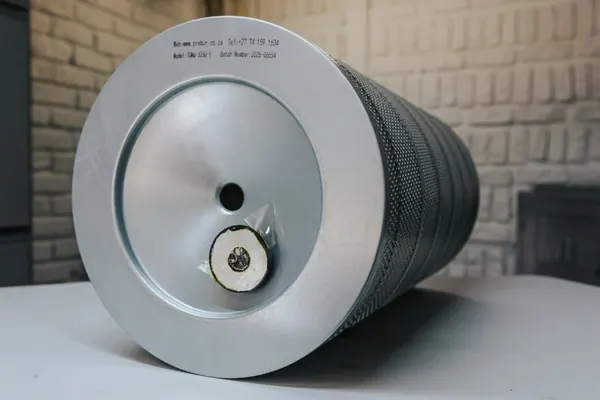
Our stocked cartridge is OD324 mm (outer diameter) at 600 or 660 mm long. OD324 matches a common powder booth cartridge size, so a polyester version should fit. “Should” is not good enough for an order, though. End caps, the top flange, the gasket and any bayonet, lid or threaded fitting all have to match your booth. We confirm the fit from your part number before we quote.
If you also run a wet paint booth, that booth needs paint arrestor media on the exhaust side, not a cartridge. See our spray booth filter guide.
When to Replace Powder Booth Cartridges
Go by the pressure gauge on the booth, not the calendar. The reading rises as powder loads the media and drops after each pulse. When pulsing no longer brings it back down, the cartridge is due. Our stocked cartridge starts at a maximum of 160 Pa when new and is replaced at 900 Pa.
Two signs the media is wrong for your booth: the reading climbs fast and pulsing does not bring it down, or powder is caked between the pleats. Our post on why dust collector cartridges fail early covers the rest.
How to Order
The stocked cellulose cartridges are on the cartridge filters page. For polyester, PTFE or antistatic, or any other size, send Nick:
- The part number off your old cartridge, or a photo of the label and both ends.
- The size: outer diameter, inner diameter and length in mm.
- The end caps: open or closed bottom, top flange, gasket, and any bayonet, lid or threaded fitting.
- The make and model of the booth.
- Whether you recover powder or spray to waste, and how often you change colour.
- Whether there is a site safety assessment, and what it says about the filters.
- How many cartridges per change, and how often you change them.
If it is our stocked size and you spray to waste, we sell from stock. Anything else goes to a quote.
Choosing filters for a powder booth? Call Nick Els on +27 74 159 1634 or get a quote.
Frequently Asked Questions
Which filters does a powder coating booth use?
Many powder coating booths pull air through pleated cartridge filters. Powder that misses the part lands on the cartridges, and a pulse of compressed air knocks it off into a hopper or tray below. The cartridge media is either cellulose or polyester.
Can I use a cellulose cartridge in my powder booth?
Yes, in a small, basic booth that sprays to waste, where overspray is thrown away rather than recovered. If you recover powder or change colour often, polyester is the better choice.
Why is polyester better for powder recovery and colour changes?
Powder blows off spunbond polyester cleanly, and far less is trapped in the filter. That means more powder comes back for reuse, and less of the old colour is left behind when you change.
Will your cartridge fit my powder booth?
Our stocked size is OD324 mm at 600 or 660 mm long, which matches a common powder booth cartridge size. A polyester version in that size should fit. We confirm the fit from your part number, or a photo of the label and both ends, before we quote.
Do powder coating filters need to be antistatic?
Some powder coating duties need antistatic media, because the powder can be combustible. Your site safety assessment decides that, not the filter supplier. If you have one, send it with your enquiry.
When should I replace powder coating booth filters?
Go by the pressure gauge. Replace the cartridges when the reading reaches the change point and pulse cleaning no longer brings it back down. For our stocked cartridge, that point is 900 Pa.
Need help choosing the right filter?
Speak to Nick Els for expert advice on filter selection, cross-referencing, and pricing for your facility.