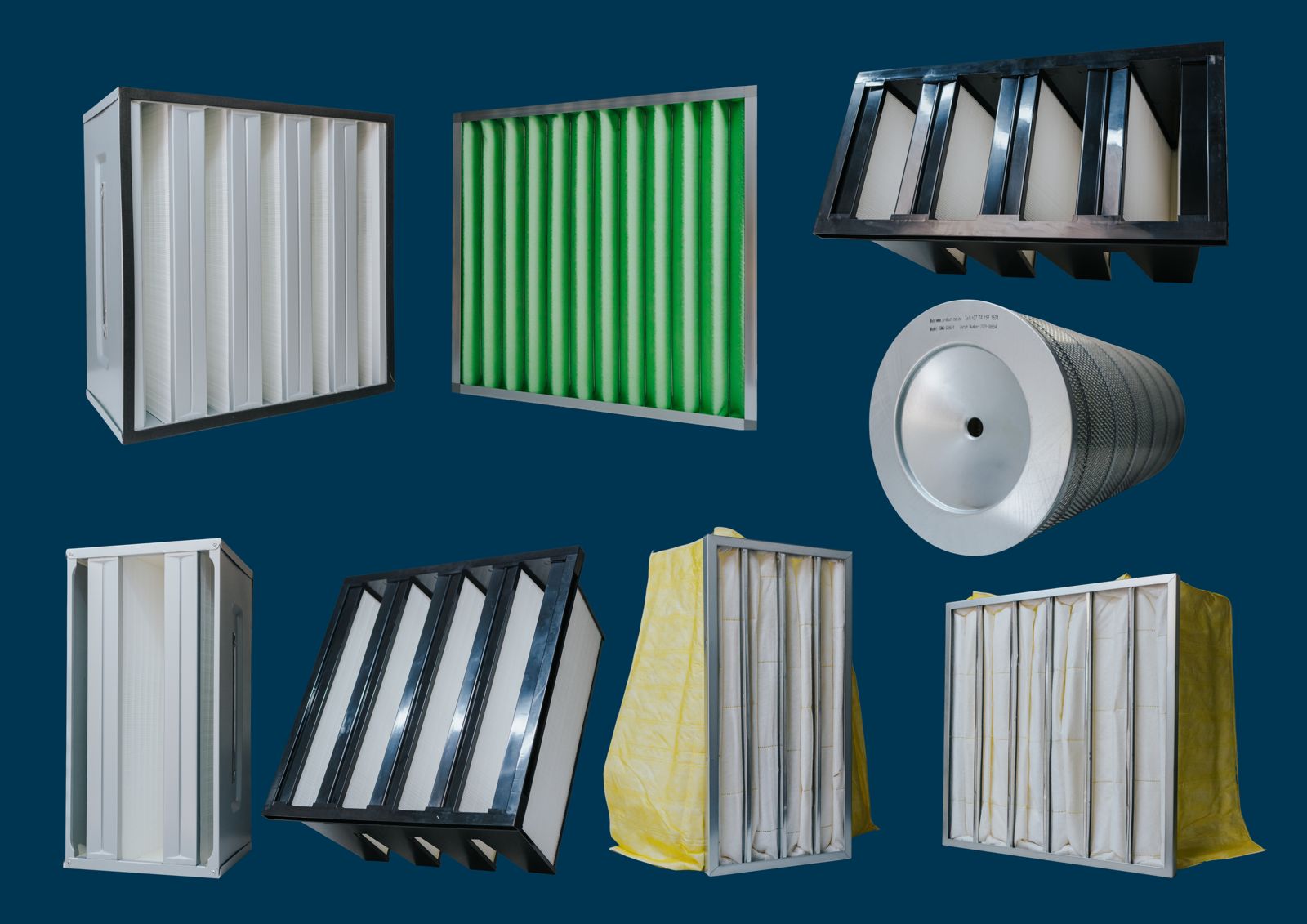
Which filter grade do I need? That is the question we hear most often from facilities managers replacing air filters for the first time, or inheriting a building where the previous team left no documentation. The good news is that filter grades follow a simple, logical structure. Once you know the basics, you can read any datasheet or spec with confidence.
This article walks you through the G, F, and H grade system, what the numbers actually measure, and how to pick the right grade for your building or facility.
The Two Standards Behind the Grades
Filter grades in South Africa come from two European standards. You do not need to memorise the standard numbers. Just know that they exist and what they cover:
EN779:2012 covers the everyday HVAC grades: G1 through F9. These are the filters in your air handling unit (AHU). When your mechanical engineer writes “G4 pre-filter” or “F9 secondary” into a spec, they are referencing EN779.
EN1822:2019 covers high-efficiency filters: H13, H14, and above. These are the HEPA filters used in hospitals, pharmaceutical cleanrooms, and other critical environments.
Both standards are widely accepted by South African compliance authorities. If your spec references either one, you are on solid ground locally.
EN779 Grade Classifications: G1 to F9
EN779 splits filters into two families based on what they catch:
Coarse filters (G grades) catch the big stuff: pollen, textile fibres, large dust particles. They are rated by “arrestance,” which is simply the percentage of coarse test dust the filter captures by weight. A G4, the most common pre-filter, catches at least 90%.
Fine filters (F grades) catch the small stuff: fine dust, combustion particles, PM2.5. They are rated by how efficiently they capture tiny 0.4-micrometre particles. An F9, the most common secondary filter, catches at least 95% of those particles.
Here is the full grade table for reference:
| Grade | Classification | Test Method | Minimum Performance |
|---|---|---|---|
| G3 | Coarse | Average arrestance | ≥80% |
| G4 | Coarse | Average arrestance | ≥90% |
| F5 | Fine | Avg. efficiency at 0.4µm | ≥40% |
| F6 | Fine | Avg. efficiency at 0.4µm | ≥60% |
| F7 | Fine | Avg. efficiency at 0.4µm | ≥80% |
| F8 | Fine | Avg. efficiency at 0.4µm | ≥90% |
| F9 | Fine | Avg. efficiency at 0.4µm | ≥95% |
In a typical two-stage commercial HVAC system, the G4 is the first stage (the pre-filter in your AHU) and the F9 is the second stage (secondary filtration). The G4 intercepts coarse particles before they reach the expensive F9, which handles the fine particulate that affects indoor air quality.
What G4 Panel Filters Actually Do
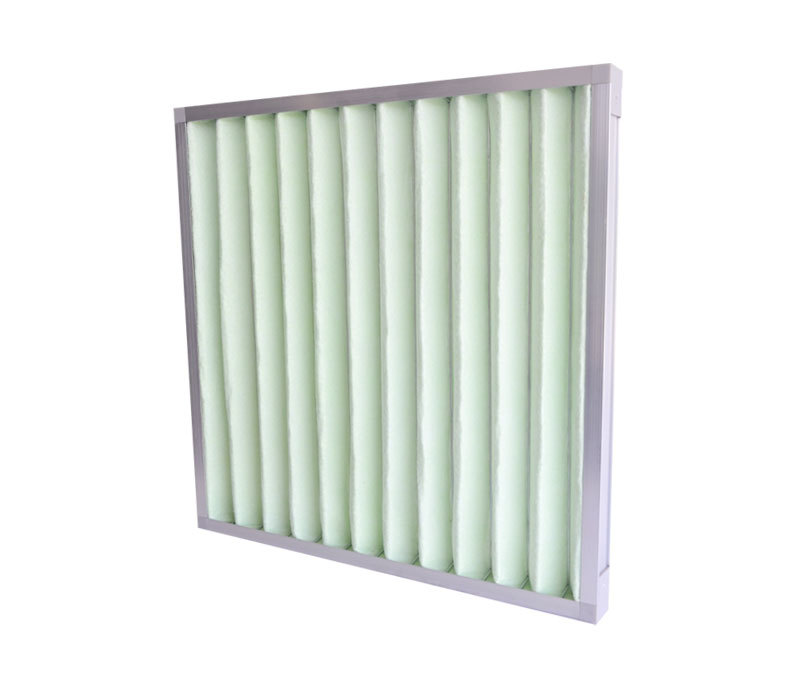
A G4 pre-filter catches coarse dust, pollen, and fibres before they reach the rest of your AHU. Without it, your coils foul up, your fan works harder, and your secondary filters clog far sooner than they should. Think of the G4 as the first line of defence. It keeps the expensive parts of your system clean.
The Airtech G4 panel filter (APP series) captures at least 90% of coarse dust per EN779, with a standard 595 x 595 x 48mm frame that fits most commercial AHU housings. The filter is typically replaced when differential pressure reaches 200-250 Pa.
How often you replace it depends on your location. On the Highveld, particularly around Johannesburg’s industrial corridor where coal combustion and mining dust push ambient particulate levels high, G4 replacement every 3-4 months is typical. Coastal facilities with cleaner air may stretch to 6 months. The best practice is to monitor differential pressure rather than relying on the calendar alone.
What F9 Pocket Filters Actually Do
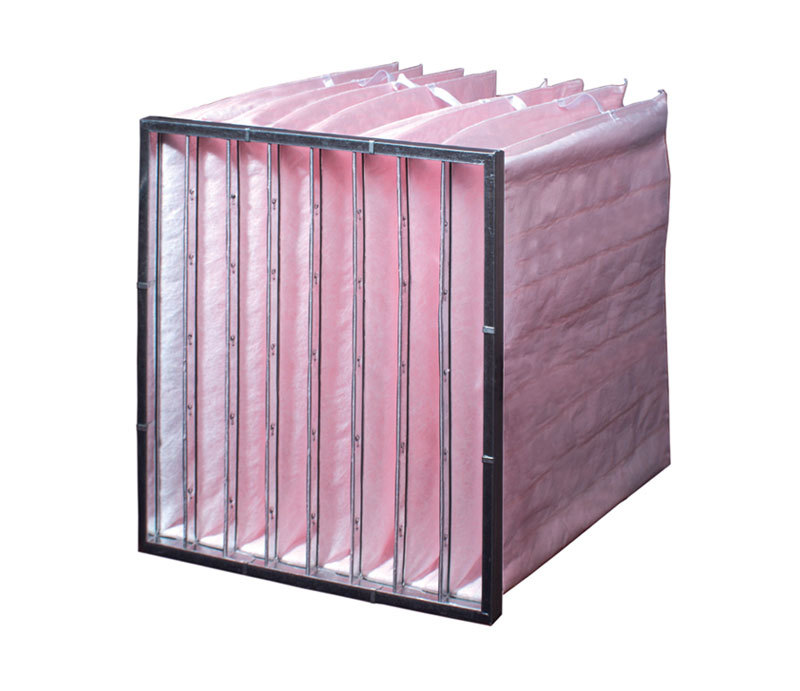
The F9 is the filter that actually determines your indoor air quality. It captures fine particles (PM2.5 combustion aerosols, diesel exhaust residue, and fine mineral dust) that pass straight through the G4 pre-filter. At 95%+ efficiency on 0.4-micrometre particles, this is the grade that protects occupant health.
F9 filtration is also the grade required for pharmaceutical GMP Grade B and C manufacturing environments, data centres, and any building where air quality directly affects people or sensitive equipment.
The Airtech F9 pocket filter (DAI/SE series) in the standard 595 x 595 x 330mm 6-pocket format has an initial resistance of 225 Pa at rated airflow. If your AHU can accommodate the deeper 600mm format, initial resistance drops to 105 Pa, extending filter life and reducing fan energy consumption.
Why Both Filters Matter: the Most Common Maintenance Mistake
The most expensive mistake in HVAC filter maintenance is neglecting the G4 while faithfully replacing the F9. When the G4 is overdue, coarse dust passes through and loads the F9 with particles it was never designed to catch. The result: your F9 hits its replacement threshold in a fraction of its normal service life, and you end up buying F9 filters two or three times more often than necessary.
Replace the G4 on schedule and the F9 lasts its full service interval. It is that simple.
EN1822 HEPA Grades: H13 and H14
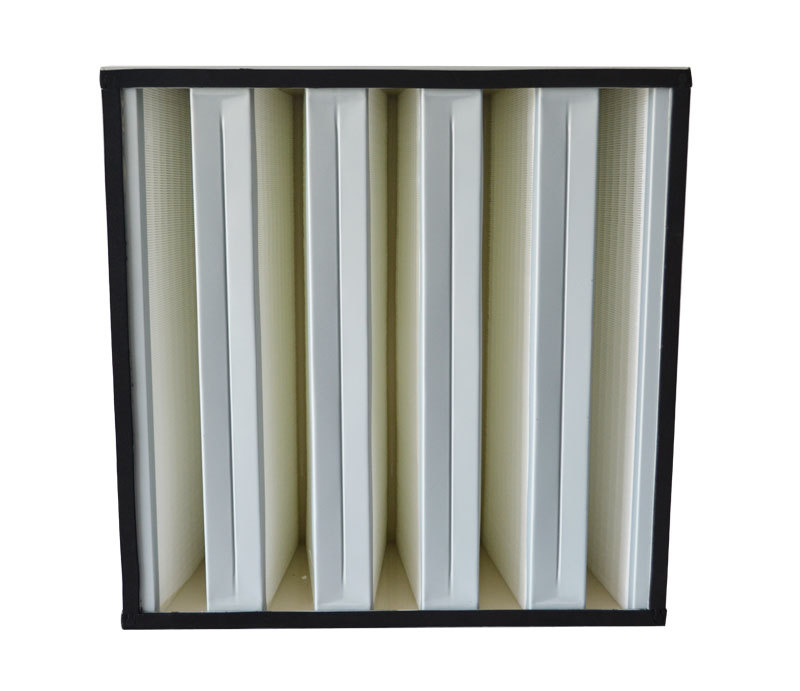
Above F9, we enter HEPA territory. These filters are tested differently, at the “most penetrating particle size” (the particle size that is hardest for the filter media to catch, typically 0.1-0.3µm).
Here is how H13 and H14 compare:
| Grade | Classification | Overall Efficiency at MPPS | Local Penetration Limit |
|---|---|---|---|
| H13 | HEPA | ≥99.95% | ≤0.25% |
| H14 | HEPA | ≥99.995% | ≤0.025% |
H13 is used in hospital general ventilation, data centre critical zones, and pharmaceutical Grade C environments.
H14 is the minimum for pharmaceutical GMP Grade A cleanrooms and hospital operating theatres. Every HEPA unit, H13 and H14 alike, ships with its own individual serial-numbered EN1822 test certificate. This per-unit certificate is the document GMP validation files require.
The key difference from EN779 filters: EN1822 requires each H13 and H14 unit to be tested individually at the factory. EN779 filters are batch-tested: a sample from a production run is tested and the whole batch is classified. For pharmaceutical and healthcare procurement, Prebur supplies an individual serial-numbered EN1822 test certificate with every HEPA unit, H13 and H14 alike.
Selecting the Right Grade for Your Application
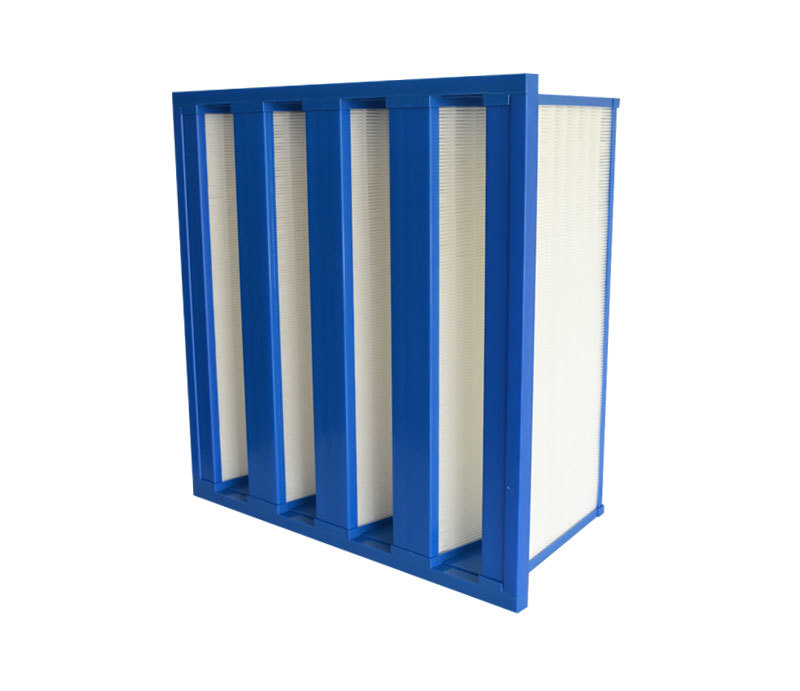
The V-Bank filter is a rigid, compact alternative to pocket filters, offering lower pressure drop and longer service life in the same footprint.
Use this table as a starting point. If your application is not listed, call Nick on +27 74 159 1634 and he will advise:
| Application | Recommended Grade |
|---|---|
| Commercial office AHU pre-filtration | G4 |
| Commercial office secondary filtration | F7–F9 |
| Pharmaceutical GMP Grade B/C AHU | F9 (or F9 V-Bank) |
| Pharmaceutical GMP Grade A terminal | H14 |
| Hospital operating theatre terminal | H14 |
| Hospital general ventilation | F9 + H13 |
| Data centre (ASHRAE TC 9.9 A3) | G4 pre + F9 secondary |
| Industrial plant AHU (Highveld) | G4 pre + F7 secondary minimum |
| Baghouse dust collector | F6 cartridge (Tong series) |
A Note on EN779 vs ISO 16890
ISO 16890 is a newer international standard (adopted 2016) that classifies filters by their efficiency against real-world particle size distributions (PM1, PM2.5, PM10). It is increasingly referenced in European project specifications but has not yet replaced EN779 as the working standard in South African practice. Filters tested to EN779:2012 remain fully compliant with South African specifications, and EN779 classification is accepted by all local compliance auditors.
For an in-depth comparison of the two standards, see our article: EN779 vs ISO 16890: What South African Engineers Need to Know.
Need help selecting the right filter? Call Nick Els on +27 74 159 1634 or request a quote.
Need help choosing the right filter?
Speak to Nick Els for expert advice on filter selection, cross-referencing, and pricing for your facility.