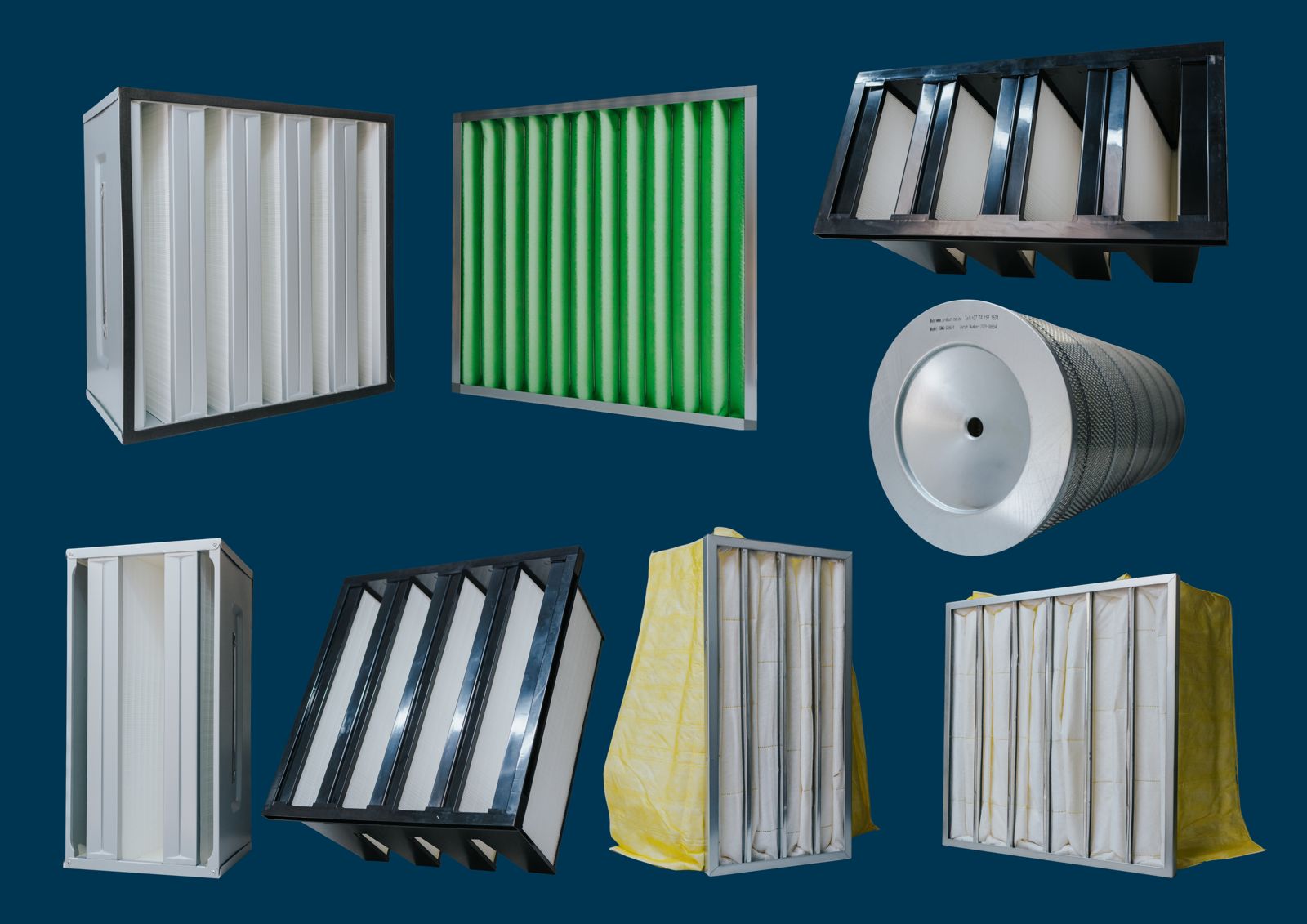
If your factory has a baghouse dust collector, the cartridge filters inside it are the part you need to replace regularly. They are the consumable that keeps the whole system working, and the component that gets the least attention until something goes wrong.
This guide covers how pulse-jet baghouse systems work, how to tell when your cartridge filters need replacing, how to cross-reference your current filter specification, and what to look for in a supplier.
How a Pulse-Jet Baghouse Works
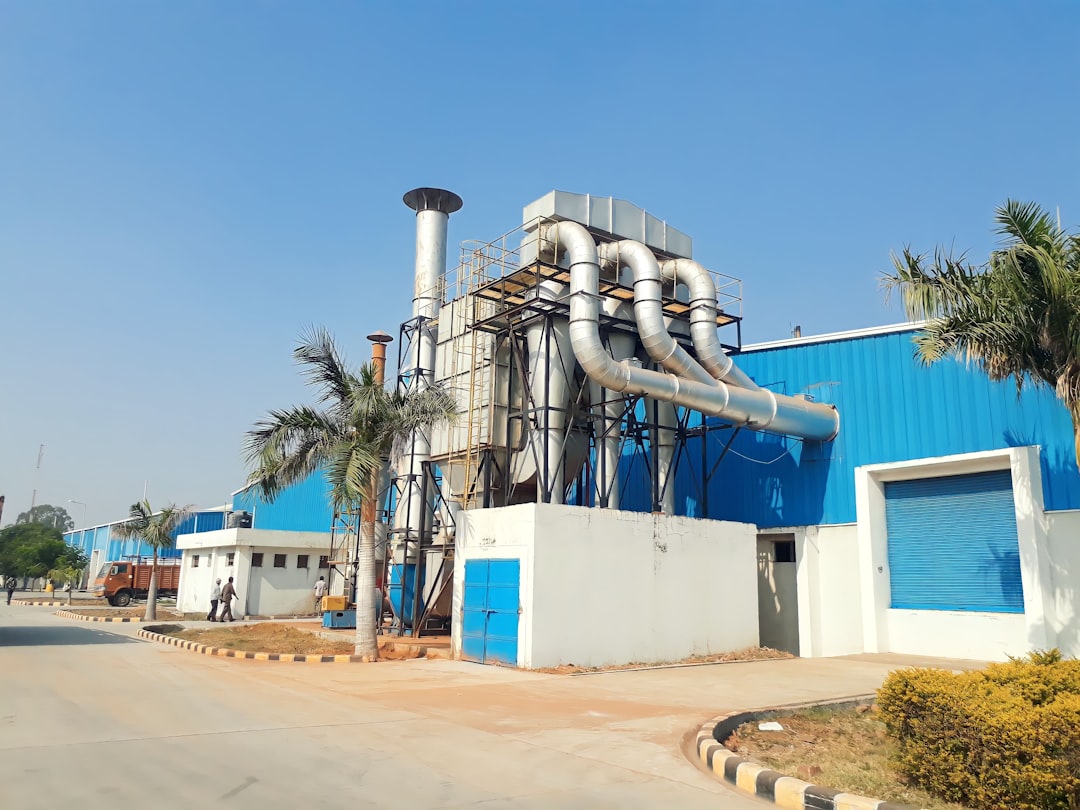
A pulse-jet baghouse is a large industrial dust collection housing. Dusty air from your process enters one side, passes through the filter elements (which trap the dust), and exits as clean air on the other side. Over time, dust builds up as a “cake” on the outside surface of each filter element.
To keep things running, a compressed air system fires short bursts of air backwards through each filter on a timed cycle. This “pulse” knocks the dust cake loose, and it falls into a hopper at the bottom for disposal.
Why the cleaning system matters for filter life. If the pulse-jet mechanism is not working properly (low air pressure, blocked valves, incorrect timing), your filters load up faster than they should and need replacing sooner. Before blaming the filters for a short service life, always check the cleaning system first.
Key operating parameters to monitor:
| Parameter | Typical Range | Action Point |
|---|---|---|
| Inlet differential pressure (clean) | 100–160 Pa | Baseline check on installation |
| Operating differential pressure | 200–600 Pa | Normal operating range |
| Replacement threshold | 900 Pa | Replace when pulse-cleaning no longer restores below 700 Pa |
| Compressed air pressure | 5–7 bar | Maintain within spec: low pressure reduces cleaning effectiveness |
| Pulse duration | 100–150ms | Check per manufacturer spec |
Cartridge Filter Types: Cylindrical vs Flat Panel
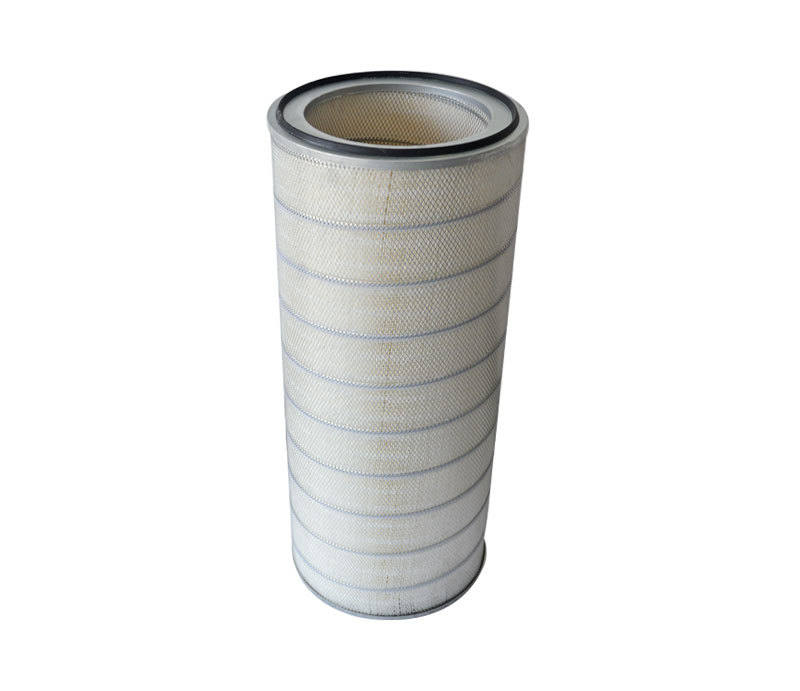
Cylindrical cartridge filters are the most common type in South African baghouse installations. They are self-supporting cylinders with inner and outer steel mesh and pleated filter media wrapped around them. The Tong series TONG-3260-Y (L600 x R324mm) and TONG-3266-Y (L660 x R324mm) are the standard models for the most common South African baghouse housing sizes.
Flat filter bags (the original baghouse design) are fabric sleeves hung in rows. While still found in older installations, most new baghouse designs in South Africa use cylindrical cartridges, which pack more filter area into the same space, are easier to handle during a filter change, and hold up better under repeated pulse-cleaning cycles.
Filter Media: Cellulose vs Synthetic
Cellulose media is the standard choice for general industrial dust. Tong series filters use cellulose media, which handles metalworking fines, cement dust, foundry particulate, and general industrial dust well. It is not suitable for wet or oily environments.
Synthetic media (polyester or PTFE) is the right choice for:
- High-humidity environments where cellulose would absorb moisture and collapse
- Oily or sticky particulate that would blind cellulose media
- Temperatures above 70 degrees C
Stainless steel inner mesh replaces the standard galvanised steel in corrosive environments such as galvanising lines, acid pickle baths, and salt spray applications. The Tong series is available in a stainless steel mesh variant for these situations.
When to Replace Baghouse Cartridge Filters
The right replacement trigger is differential pressure, not the calendar. When pressure across the housing hits 900 Pa and pulse-jet cleaning can no longer bring it back below 700 Pa, the filter set is due for replacement.
What causes filters to wear out faster:
-
Heavy dust loading. Foundry shakeout lines and cement kiln exhausts load filters much faster than light machining dust. High-dust applications may need replacement every 6 months; lighter applications can run 12-24 months.
-
Weak pulse-jet cleaning. If compressed air pressure is low or solenoid valves are not firing properly, the cleaning cycle cannot clear the dust cake effectively. Check the air supply and valves before concluding the filters are the problem.
-
Seal bypass. If the sealing ring between the cartridge and the tube sheet is worn, unfiltered air bypasses the filter entirely. Differential pressure stays low (which looks fine on the gauge) but emissions rise and downstream equipment gets damaged. Inspect seals at every filter change.
-
Moisture ingress. Wet dust cannot be pulse-cleaned. If your process generates steam or the inlet air is humid, dust cakes permanently onto the filter surface. Make sure the baghouse is insulated and inlet temperature stays above dew point.
Cross-Referencing Your Current Cartridge Filter
If you are sourcing replacement cartridges for an existing baghouse, here is the information needed to find the right Tong series match:
- Filter outer diameter (OD): typically 324mm for the TONG-3260/3266-Y
- Filter length: 600mm (TONG-3260-Y) or 660mm (TONG-3266-Y)
- Inner mesh type: galvanised or stainless steel
- Media type: cellulose or synthetic
- Cleaning mechanism: pulse-jet (confirm single-end or both-end clean)
- Housing manufacturer: if known, this helps confirm the tube sheet configuration
Send these details to Nick on +27 74 159 1634 or sales@prebur.co.za for a same-day cross-reference and quote.
Understanding Your Dust: Why Application Matters
Not all industrial dust behaves the same way. The characteristics of the dust in your process affect which filter media works best and how quickly filters load.
Particle size: Fine particles (sub-10 micrometre) load filters faster and penetrate deeper into the media. Metalworking fines and cement dust are fine-particle applications. Wood chips and coarse foundry sand are less punishing.
Bulk density: Heavy metallic fines (steel, cast iron, aluminium) drop into the hopper quickly during pulse-cleaning. Lighter dust (flour, carbon black, wood dust) stays suspended longer and redeposits on the filter face, reducing cleaning effectiveness.
Hygroscopic properties: Some dusts (cement, certain chemicals) absorb moisture from the air and can cake permanently onto cellulose media. Use synthetic media or keep inlet temperature above dew point.
Abrasiveness: Highly abrasive dusts (silica, alumina, shot blast media) wear the filter surface under repeated pulse impacts. Heavier-weight media or polyester needle felt is recommended for abrasive applications.
Temperature: Cellulose media handles up to about 70 degrees C continuously. Hotter applications such as kiln exhausts and furnace ventilation need temperature-rated synthetic media (Aramid/Nomex up to 200 degrees C, fibreglass above that).
When ordering replacement filters, always confirm the dust type and any temperature or moisture considerations with your supplier. Dimensions alone are not enough.
Compliance and Record-Keeping
Two pieces of South African legislation make baghouse maintenance a compliance matter, not just an operational one:
Workplace safety (OHSA) requires employers to control dust exposure in the workplace. A functioning baghouse with serviceable filters is the primary engineering control. If your filters are overloaded or failed, that is a compliance gap an inspector will flag.
Environmental emissions (NEMAQA) sets limits on particulate released from listed industrial activities such as foundries, cement plants, metal processing, and surface treatment. Your atmospheric emission licence (AEL) likely references baghouse filtration as the primary control technology.
What this means in practice: Keep a simple log of filter replacement dates, differential pressure readings at replacement, and filter specifications (grade, model, supplier). This is the paper trail an OHSA inspector or NEMAQA auditor expects to see, and it takes very little effort to maintain.
Prebur supplies Tong series cartridge filters manufactured to EN779 (F6 grade). On request, we can provide a filter change log template for your maintenance file.
Wheelabrator Shot Blast Machines
Wheelabrator shot blast reclaim systems use cylindrical cartridge filters to separate fine metallic dust from reclaimed blast media. The Tong TONG-3260-Y (L600 x R324mm) is a direct cross-reference for common Wheelabrator housing sizes.
Shot blast applications produce dense metallic fines. The dust cake is heavy and compact. Pulse-jet cleaning runs at higher frequency than in a conventional baghouse. Replacement intervals of 6-8 months are common in high-production surface treatment facilities.
Local Stock Availability
Prebur holds Tong series TONG-3260-Y and TONG-3266-Y cartridge filters in stock in Silverton, Pretoria. Orders placed before midday are despatched same day.
Need help selecting the right filter? Call Nick Els on +27 74 159 1634 or request a quote.
Need help choosing the right filter?
Speak to Nick Els for expert advice on filter selection, cross-referencing, and pricing for your facility.