Your spec mentions ISO 16890 but you are used to EN779 grades. What is the difference and which one matters in South Africa?
If you have seen filter specifications that reference “ePM2.5 ≥50%” or “ISO ePM1” and wondered what happened to the familiar G4 and F9 grades, you have encountered ISO 16890. This newer standard is gradually appearing in South African project specs, particularly on buildings with multinational clients or where the engineer is drawing on European templates.
This article explains the practical differences, gives you the crosswalk tables to translate between the two, and tells you which standard actually matters for South African compliance today.
The Short Answer: EN779 Is Still the Standard in South Africa
Before we get into the technical detail, here is what most readers want to know:
EN779:2012 remains the reference in local mechanical engineering specifications. South African engineers specify in EN779 grades, maintenance contracts reference EN779, and procurement frameworks are built around it. This is not changing in the near term.
EN779:2012 classification is the accepted reference for South African compliance frameworks. SABS, OHSA, NEMAQA, and SAHPRA GMP audits all recognise EN779 as the applicable filter classification standard. There is no regulatory requirement to transition to ISO 16890 in South Africa.
Airtech filters are manufactured to EN779:2012. G and F grades are manufactured to EN779:2012; HEPA grades to EN1822. CNAS laboratory test reports are held for the G4, H13, and H14 grades, and individual serial-numbered EN1822 test certificates are supplied with every HEPA filter, H13 and H14 alike.
So if your spec uses EN779 grades, you are covered. Read on if you need to interpret an ISO 16890 spec or understand why the two systems exist side by side.
How the Two Standards Differ
Both standards classify air filters by filtration performance, but they measure different things, which is why the grades cannot be directly converted.
EN779:2012 tests a filter against a single standardised particle size or test dust under laboratory conditions. An F9 filter, for example, means it captures at least 95% of 0.4-micrometre particles. The result is a single, clear grade: G3, G4, F5, F6, F7, F8, or F9.
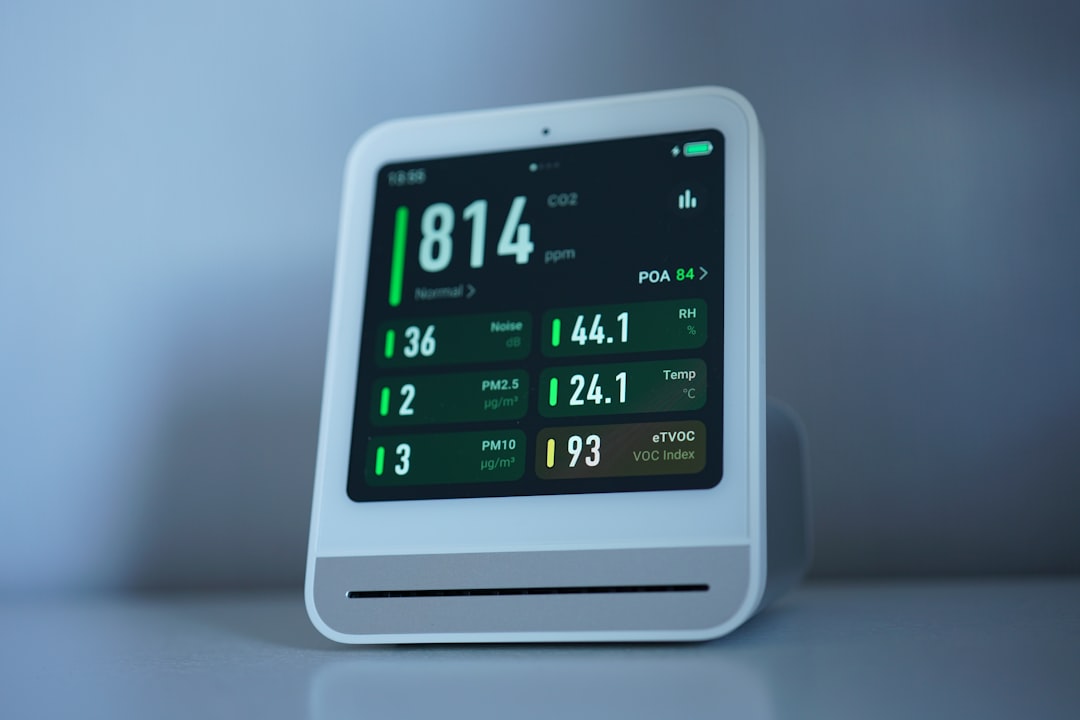
ISO 16890 tests a filter against three real-world particle size categories that correspond to recognised health-relevant groups:
- PM10: particles up to 10 micrometres (coarse dust, pollen)
- PM2.5: particles up to 2.5 micrometres (fine particulate, combustion aerosols)
- PM1: particles up to 1 micrometre (ultrafine, includes diesel exhaust)
A filter’s ISO 16890 classification is expressed as its efficiency against the relevant fraction. For example, “ePM2.5 ≥50%” means it captures at least 50% of PM2.5 particles.
ISO 16890 also includes a discharge test that strips electrostatic charge from the filter media before testing. This matters because some filter media relies on static charge for efficiency, which fades over time in service. ISO 16890 aims to measure the filter’s long-term performance, not just its out-of-the-box performance.
The EN779 to ISO 16890 Crosswalk
Direct conversion is approximate because the two standards measure different things, but this table gives you a practical starting point:
| EN779 Grade | ISO 16890 Approximate Equivalent | Notes |
|---|---|---|
| G4 | Coarse (no ISO PM classification) | Coarse filters below ePM10 ≥50% threshold are not classified by ISO 16890 |
| F5 | ePM10 ≥50% | Low-efficiency fine filter |
| F6 | ePM2.5 ≥50% | |
| F7 | ePM2.5 ≥65% | |
| F8 | ePM2.5 ≥80% | |
| F9 | ePM1 ≥50% or ePM2.5 ≥90% | Depends on actual filter test data |
The important caveat on F9: An EN779 F9 filter does not automatically qualify as ISO 16890 ePM1. The discharge test may show lower efficiency if the filter media relies on electrostatic charge. Conversely, a high-quality synthetic F9 filter may comfortably qualify as ePM1 under ISO 16890.
If a project specification specifically requires an ISO 16890 ePM1 filter, request the ISO 16890 test data for the specific filter model. Do not assume any EN779 F9 will qualify.
What To Do When ISO 16890 Appears in a Spec
If you encounter an ISO 16890 specification on a South African project, here is the practical approach:
-
Identify the PM fraction. ePM2.5 corresponds roughly to F7-F9 in EN779 terms. ePM1 corresponds to high-performance F9 or better.
-
Request the Airtech ISO 16890 test data. Some Airtech filter models have been tested to both standards. Contact Prebur: if the ISO 16890 data is available for the specific filter, it can be provided.
-
Clarify with the specifying engineer. If the engineer specified ISO 16890 from a European project template, they may accept the EN779 equivalent classification. This is a common situation. The engineer may not realise that EN779 is still the applicable local standard.
-
For pharmaceutical and cleanroom projects: ISO 16890 does not cover HEPA filters. These remain tested exclusively to EN1822. If a specification references ISO 16890 for terminal HEPA, that is an error. The correct standard is EN1822:2019.
Why Particle Size Fractions Matter
The shift from EN779 to ISO 16890 in Europe reflects growing recognition that the health impact of airborne particles depends heavily on their size. PM1 and PM2.5 fine particles penetrate deep into the lungs and contribute to cardiovascular and respiratory disease. Coarser PM10 particles are largely caught in the upper airway.
To put it in practical terms: a G4 pre-filter protects the AHU, not the building occupants. It passes most PM2.5 and essentially all PM1 particles straight through. The F9 secondary filter (or its ePM1 equivalent under ISO 16890) is the filter that actually determines whether people in the building are breathing fine particulate or clean air.
This distinction matters most in hospitals, schools, office buildings (where indoor PM2.5 is linked to cognitive performance), and any facility with vulnerable occupants such as elderly residents, immunocompromised patients, or people with respiratory conditions.
Where Does EN1822 Fit In?
Both EN779 and ISO 16890 stop at F9, the highest fine filter grade for general ventilation. Above F9, the standards framework changes completely.
EN1822 covers high-efficiency grades: H13 and H14 (HEPA), and the even higher ULPA grades. These filters are tested at the most penetrating particle size (MPPS), a fundamentally different method from either EN779 or ISO 16890.
In practice: if a specification references any H-grade filter (H13, H14) or ULPA, the standard is EN1822 regardless of whether the project uses EN779 or ISO 16890 for the lower grades. ISO 16890 explicitly does not cover HEPA. EN1822 is the only applicable standard for terminal HEPA filtration in pharmaceutical cleanrooms, hospital operating theatres, and high-containment laboratories.
For pharmaceutical procurement teams: GMP Grade A terminal HEPA is always H14 per EN1822:2019, with individual serial-numbered test certificates. This does not change regardless of what the lower-grade spec references.
See: HEPA Filter Grades Explained: H13 vs H14
MERV Ratings: The US System
If you are working with US-sourced specifications or multinational clients, you may encounter MERV (Minimum Efficiency Reporting Value) ratings, the American equivalent defined in ASHRAE 52.2. Here is a rough crosswalk:
| MERV | EN779 Approximate | ISO 16890 Approximate | Notes |
|---|---|---|---|
| MERV 6–7 | G4 | Coarse | Pre-filter range |
| MERV 8 | F5–F6 | ePM10 | Lower secondary |
| MERV 11 | F7 | ePM2.5 ≥50% | Common US office spec |
| MERV 13 | F7–F8 | ePM2.5 ≥70–80% | ASHRAE 62.1 baseline |
| MERV 14–15 | F8–F9 | ePM2.5 ≥85–90% | High-performance commercial |
| MERV 16 | F9 | ePM1 | Approaches HEPA territory |
The MERV 13 question comes up often. It became widely referenced during COVID-19 ventilation guidance. A MERV 13 corresponds approximately to an EN779 F7 or F8 filter. If a US-sourced specification requires MERV 13 on a South African project, an F7 or F8 Airtech filter manufactured to EN779 is the correct substitution. Get written confirmation from the specifying engineer before substituting.
MERV ratings are not used in South African compliance frameworks. EN779 (or EN1822 for HEPA) is the applicable standard for SABS, OHSA, NEMAQA, and SAHPRA GMP compliance purposes.
Summary
- EN779:2012 and ISO 16890 measure different things. Classifications cannot be directly converted.
- EN779 remains the working standard in South African HVAC practice and is accepted by all local compliance authorities
- ISO 16890 is increasingly appearing in South African specifications on projects with international influence
- G4 maps to “coarse” (no ISO PM classification); F9 maps to approximately ePM1 or ePM2.5 depending on the specific filter
- Airtech G and F grades are manufactured to EN779:2012; individual serial-numbered EN1822 test certificates are supplied with H14 HEPA filters. ISO 16890 data may be available for specific models on request
- HEPA grades H13/H14 are manufactured to EN1822 regardless of which standard the project spec references
Need help selecting the right filter? Call Nick Els on +27 74 159 1634 or request a quote.
Need help choosing the right filter?
Speak to Nick Els for expert advice on filter selection, cross-referencing, and pricing for your facility.